
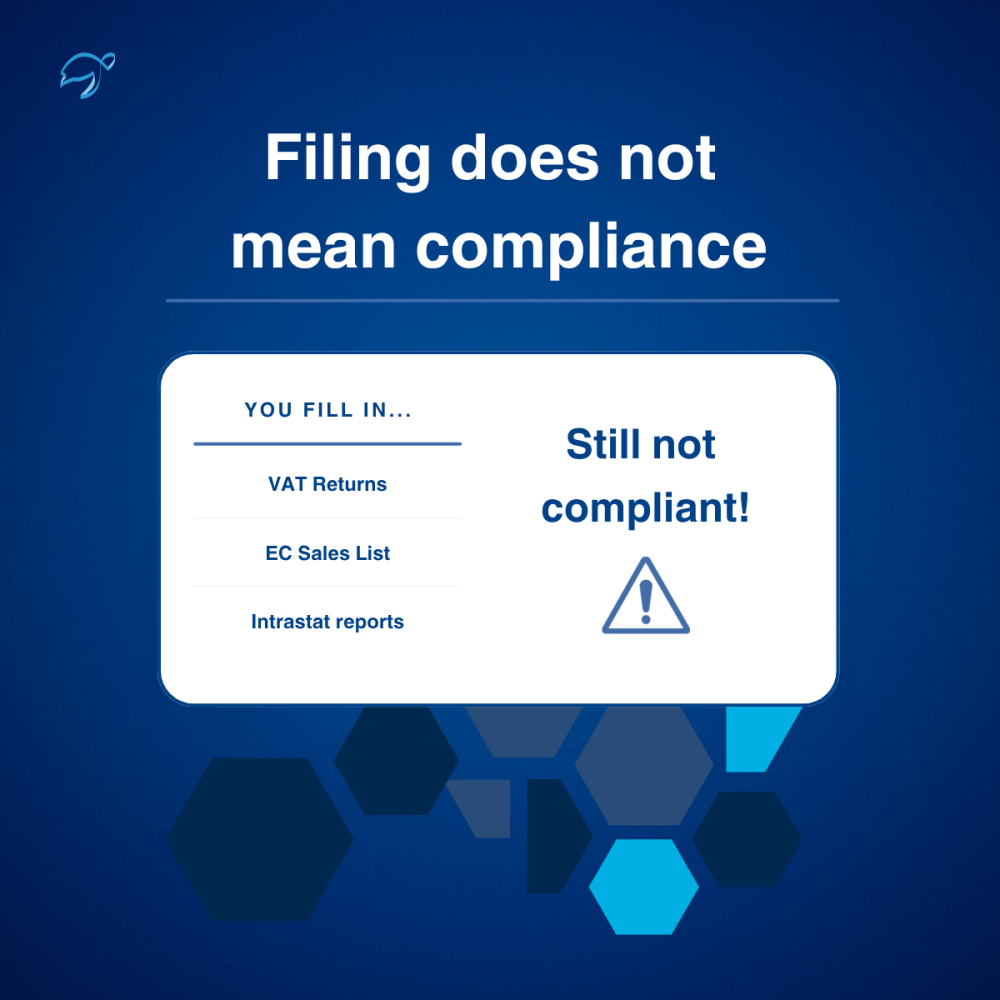
In practice, VAT compliance is often understood in a relatively narrow and formalistic way. A company is typically considered “VAT compliant” if it submits its key VAT-related returns on time and in the prescribed form. These usually include periodic VAT returns, annual VAT returns, EC Sales/Purchase Lists, and Intrastat returns. In addition, export and import declarations form an integral part of the broader VAT compliance landscape for businesses engaged in cross-border trade.
The timely submission of these filings is undoubtedly an important first indicator. It shows that the company acknowledges its VAT obligations and has established at least a basic reporting framework. From a compliance perspective, this is a necessary starting point. However, when VAT compliance is assessed in substance rather than in form, it quickly becomes apparent that filing these documents alone is far from sufficient.
VAT compliance, by its nature, goes well beyond the mere existence of returns and declarations.
From formal compliance to consistency and reconciliation
The first analytical layer concerns completeness. Are VAT returns filed in all jurisdictions where filing obligations exist? Have all VAT registrations been identified and obtained in light of the company’s business model, turnover thresholds, supply chains, and transaction flows? Are reporting obligations correctly assessed based on the volume and nature of supplies? A company may be fully compliant in one jurisdiction while being non-compliant in another simply because a registration obligation has been overlooked.
The second layer concerns consistency and reconciliation. Even if all relevant registrations exist and all required returns are filed, this does not yet mean that VAT compliance has been achieved. A critical step is to ensure that the figures reported across different filings are internally consistent. VAT returns, EC Sales Lists, Intrastat reports, and customs declarations should logically flow into one another. There should be no unexplained gaps, contradictions, or “breaks” in the meaning of the data.
Moreover, the reported figures should be traceable beyond the tax filings themselves. VAT data should be reconcilable with the general ledger, the balance sheet, the profit and loss statement, and other financial records. Ideally, the numbers should be easy to follow not only between tax returns and supporting documentation, but also within the company’s financial statements. If reported VAT figures cannot be reasonably traced back to accounting records, this is already a strong indication of underlying compliance weaknesses.
However, even if all registrations are in place, all returns are filed, all figures reconcile, and the data appears coherent across tax filings, accounting records, and financial statements, VAT compliance is still not complete.
Documentation readiness: primary evidence, not just system entries
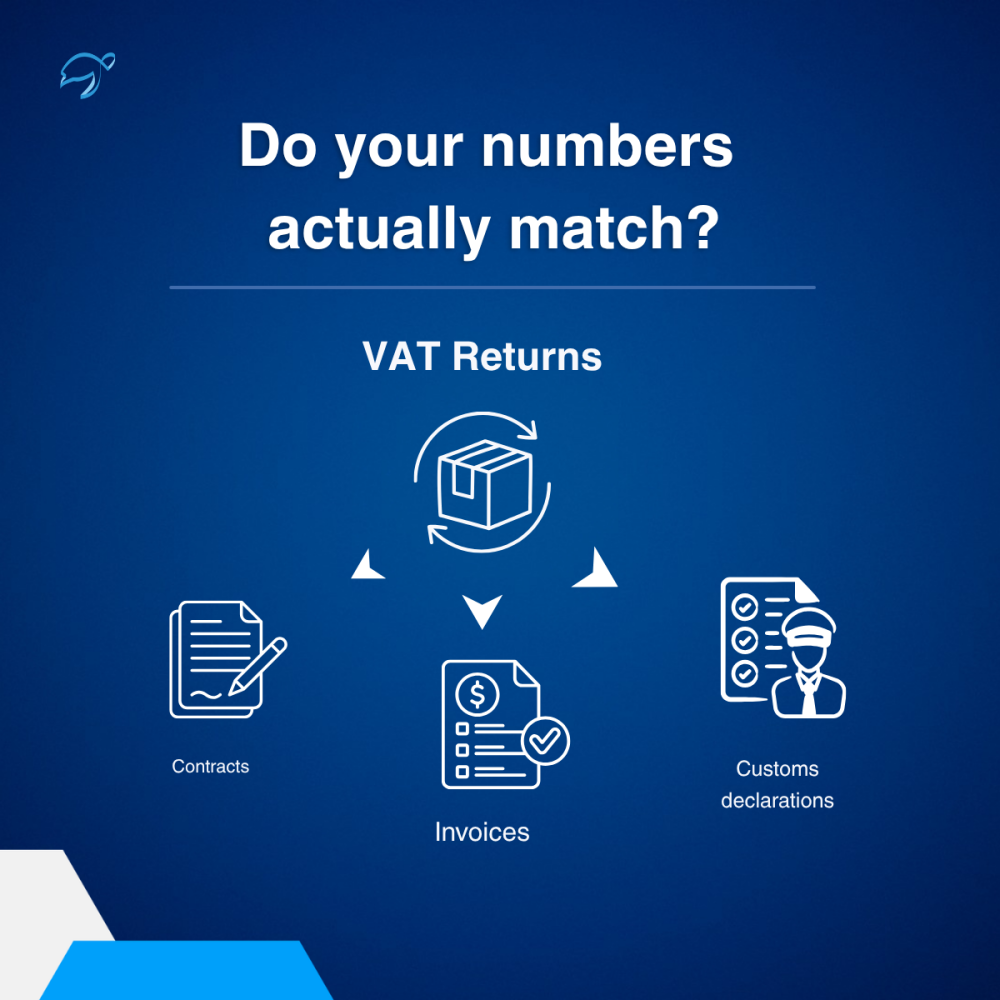
A third, often underestimated, layer of VAT compliance relates to supporting and transactional documentation. Every transaction reported in VAT returns must be supported by appropriate underlying documentation. This includes, in particular, transport documentation, contracts, invoices, customs documentation, and any other primary documents that form the legal and factual basis for accounting entries. This scope must include intercompany transactions - which is very often missing.
VAT compliance presupposes that what is reported in tax returns is not merely a numerical reflection of postings in an accounting or ERP system, but is supported by genuine primary documentation. Accounting entries should be the consequence of real transactions, not a substitute for them. Everything that is declared must be traceable not only to a system entry, but also to a primary document that substantiates the transaction.
It is therefore essential to verify that all relevant documents - such as transport documents and contractual agreements - are properly prepared, complete, and readily available. These documents should not merely exist somewhere in a physical archive that has not been accessed for years. They must be accessible in practice, ideally in digital form, and capable of being retrieved and presented to tax authorities within a reasonable timeframe, for example as PDF copies during a tax audit.
Even this, however, is still not the end of the VAT compliance analysis.
Operational substance: aligning filings with reality

There is a deeper layer which becomes particularly relevant once a company begins to critically assess whether it is truly compliant: the alignment between documentation, accounting, and operational reality.
VAT compliance cannot be assessed in isolation by the tax or finance function alone. It is essential to engage with operational colleagues and to understand how transactions are executed in practice. The key question is whether the transactions documented, recorded, and reported genuinely reflect the operational processes of the business.
This means verifying that the functions described in contracts and invoices are actually performed, that the services invoiced are genuinely rendered, that goods movements correspond to transport evidence, and that the assumed “facts” from a tax perspective are also facts operationally.
For standalone companies, this requires confirming that sales processes, service delivery, or production activities align with the documentation and accounting treatment applied. For groups of companies, the analysis becomes significantly more complex and far more critical. In group structures, functions are often deliberately split across different legal entities, with individual companies assigned specific roles within the value chain.
In such cases, VAT compliance cannot be assessed without a clear understanding of which entity performs which functions, where employees are located, which company controls and executes operational activities, who ships or produces goods, and at what point ownership in goods actually transfers. A documentation set may appear coherent on paper, and all returns may reconcile flawlessly. Yet, once the factual execution of transactions is examined - who actually performs the work, whose people are involved, where decisions are made, and how goods physically move - the VAT treatment applied may no longer be defensible.
True VAT compliance therefore requires a critical review of the entire chain: from operational reality, through contractual arrangements and primary documentation, to accounting records and finally to tax filings. Only when all these layers are aligned can a company reasonably conclude that it is VAT compliant not only in form, but also in substance.
The cross-tax dimension: VAT does not live in a vacuum
Once a company has progressed through the layers above, moving from formal compliance to substance-based compliance, confirming that operations are properly documented, and ensuring that the right VAT returns are generated from reliable data, there is a further dimension that often determines whether the compliance framework is truly robust: the way VAT positions interact or possibly conflict with other taxes.
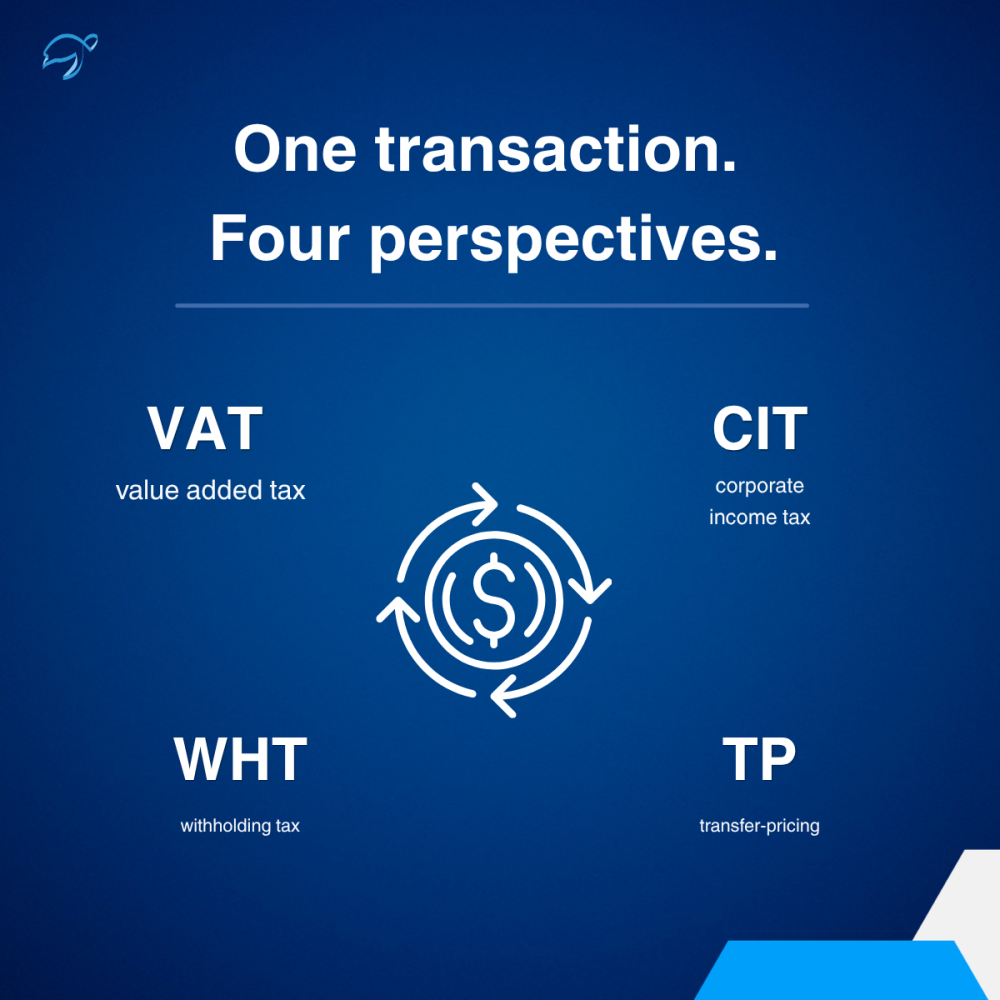
In many organizations, tax workstreams remain relatively isolated. There may be a VAT team, a corporate income tax (CIT) and withholding tax (WHT) team, and a transfer pricing (TP) function, each operating largely in parallel. The “touchpoint” between them is often limited to the month-end or year-end close, when teams focus on bookings, provisions, and the balance sheet and P&L accounts reflecting the results for each tax type. This separation is understandable from an organizational standpoint, but it is also a structural risk.
The reason is simple: transactions do not “belong” to one tax. The same operational event typically has implications for VAT, CIT, WHT, and TP simultaneously, and a position that appears correct from one angle can become problematic when viewed through another lens.
A common example arises when a transaction is not subject to VAT. The VAT conclusion might be technically correct, yet the organization still needs to understand how that same transaction is treated for income tax purposes. Similarly, where input VAT is irrecoverable, the question is not only whether the VAT recovery restriction is correct, but also how the non-deductible VAT should be reflected for CIT purposes. Are there limitations, capitalization implications, or specific local tax adjustments that need to be considered?
The interaction becomes even more sensitive when withholding tax and transfer pricing are in the picture. Intercompany service fees, royalties, interest, and other cross-border payments require a consistent view across VAT, WHT, and CIT. A TP-driven adjustment, for example a year-end true-up to align margins, may be entirely expected from a transfer pricing perspective, but it can trigger VAT consequences, particularly where the adjustment relates to supplies of goods or services. If the adjustment is in fact a price change for taxable supplies, the VAT treatment may require credit notes, amended invoicing, or specific reporting, especially in cross-border scenarios.
The practical difficulty is that the operational reality of the business can make certain “clean” tax concepts extremely hard to implement. Consider a business model with high-volume sales, such as e-commerce, where thousands of orders are shipped daily from multiple fulfillment locations to customers across jurisdictions. A theoretical end-of-year “true-up” of product prices may be feasible in a spreadsheet, but operationally it can be close to impossible to reflect accurately in VAT for each individual supply, each rate, each destination, and each invoice. The risk is not only technical; it is systemic: a mismatch between the tax model and the operational model can create compliance exposures even where the intention is correct.
Another example concerns financial transactions and exemptions. If an organization takes a well-trodden approach and concludes that interest income is VAT exempt (or out of scope), this might be correct for VAT, but it can have a significant knock-on effect—such as restrictions on input VAT recovery (for example via partial exemption - pro-rata - methods) and the resulting consequences in cost allocation and, ultimately, income tax. A VAT conclusion can therefore indirectly change the cost base, which in turn affects CIT, TP outcomes, and even the pricing model.
It is quite a common practice for group companies to purchase group wide services centrally and recharge it – via a TP allocation method – to group companies. For certain industry sectors working with a VAT pro-rata is standard practice, but for inbound group wide services obtained with a purpose of redistributing the costs across group companies, these should be kept out of the VAT pro-rata, ergo (non-recoverable) VAT should not be included in the recharge of costs nor should input VAT be restricted on the initial purchase of the group wide services. Arguably, the on charged VAT component should not be (CIT) tax deductible in the group entit(y)ies either.
For these reasons, VAT compliance should not be treated as a standalone discipline. It must be integrated into a cross-tax governance approach where VAT, CIT, WHT, and TP specialists actively communicate and test conclusions against each other. Adjustments that appear “purely VAT” (such as credit notes or corrections to taxable bases) may have TP and CIT consequences. Equally, decisions made for TP or withholding tax reasons can reshape the VAT footprint and reporting obligations. As a rule of thumb, multinationals should also keep track of the Effective VAT Rate (“EVR”) – like tracking the Effective Corporate Income Tax Rate (“ETR”) of the Group - to ensure the right amount of VAT is paid over the “added value” of the group of companies as a whole. Nowadays, especially for group companies that operate on the single ERP platform, tracking EVR and ETR should not be a complex task to set up and maintain.
In other words, a robust compliance model requires that tax specialists talk to each other, especially about issues that may appear unrelated at first glance. The objective is not to create unnecessary complexity; it is to avoid blind spots. True compliance is achieved when the company can explain its transactions consistently across taxes, demonstrate that reporting aligns with documentation and operational reality, and show that its tax positions form one coherent narrative rather than several isolated ones. Any company needs a Governance Model and Tax Control Framework, to be compliant but more importantly to only carry the correct VAT costs.